How to Deliver a Difficult Diagnosis: What Patients Need to Hear and When
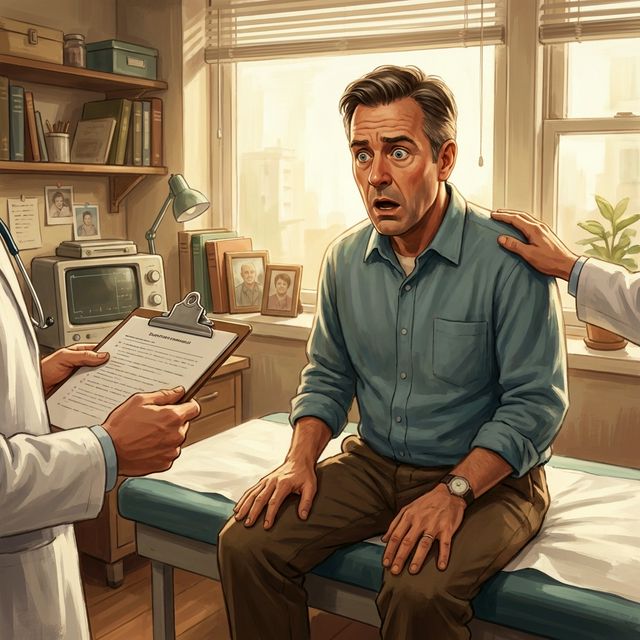
He walked in smiling. Cracking a joke about beating the lunch rush. James Okafor, 52, history teacher, is sitting in your office expecting routine blood work results. You're holding a biopsy report that says stage 2 colorectal cancer. The prognosis is good — genuinely good — but "good prognosis" and "you have cancer" don't exist in the same sentence for the person hearing it. In the next three minutes, you will reshape how this man understands his life. How you say it matters as much as what you say.
Why This Conversation Goes Wrong
You lead with the medical term. "Malignant neoplasm" means nothing to a patient in shock. They hear the word "cancer" and stop processing everything that follows it. The clinical term doesn't soften the blow — it delays comprehension.
You rush to treatment options. The patient is still absorbing the diagnosis while you're three slides into the treatment plan. Information delivered during shock isn't retained. You're talking to yourself.
You fill the silence with data. When the patient goes quiet, the instinct is to keep talking — survival rates, clinical trials, specialist referrals. But silence is processing, not confusion. Interrupting it with more information is like pouring water into an already full glass.
You forget the person behind the patient. A 52-year-old teacher isn't thinking about 5-year survival rates. He's thinking about whether he'll make it to graduation, whether he can still stand in front of a classroom, whether his students will find out.
The Warning Shot
Studies in oncology communication — particularly the SPIKES protocol adapted for general practice — show that a brief preparatory statement before the diagnosis dramatically improves patient comprehension, emotional processing, and trust in the physician. The "warning shot" isn't deception. It's giving the brain a fraction of a second to prepare.
The setup (before the word "cancer")
"James, I've reviewed all your results, and I need to share some news that isn't what either of us was hoping for." This single sentence signals gravity. It shifts the patient from casual to alert. They are now bracing, which — counterintuitively — means they will process what comes next more effectively.
Plain language, one sentence
"The biopsy showed cancer in your colon. It's stage 2, which means we caught it relatively early." No jargon. No hedging. One sentence with two facts: what it is, and where it stands. Stop here.
The pause
Let them respond. They may say "Wait, what?" They may go completely silent. They may crack a joke — "You sure you've got the right chart?" All of these are processing mechanisms. None require correction. Your job right now is to be present, not informative.
Hope with honesty
"The treatment outlook for this stage is genuinely encouraging. More than 80% of patients with stage 2 are doing well five years later." Lead with the positive framing but don't over-promise. "Genuinely encouraging" is more credible than "great news."
Their world, not yours
"What's the first thing going through your mind right now?" Not "do you have any questions" — that's too clinical. This question invites them to tell you what they're actually worried about, which is almost never what you'd guess.
The moment that changes everything
He's not afraid of dying. He's afraid of not teaching.
James's biggest fear isn't death. It's not even treatment. The question burning beneath every other question is: "Am I going to be able to keep teaching?" His identity lives in that classroom — 25 years of lesson plans, students who come back to visit, the history department he built. If you address survival rates without addressing quality of life, you'll inform him but you won't reach him. The sentence that changes this conversation is: "Most patients with your diagnosis continue working through treatment — let's talk about what that looks like for your schedule." Something shifts. He's not just a patient anymore. He's a teacher with cancer, and teachers make plans.
What to Say (and What Not To)
Instead of
"Your biopsy came back positive for malignant cells."
Try this
"The biopsy showed cancer. I know that's a hard word to hear."
Instead of
"The five-year survival rate is 80%."
Try this
"More than eight out of ten patients with your stage are doing well five years out."
Instead of
Continuing to talk when the patient goes silent.
Try this
"Take a moment. I'm not going anywhere."
Instead of
"We need to start treatment immediately."
Try this
"We have good options, and we have time to make a plan together."
Instead of
"Do you have any questions?"
Try this
"What's the first thing going through your mind right now?"
The Bigger Picture
A 2023 study in the Journal of Clinical Oncology found that patients who rated their diagnosis conversation as "compassionate" were 40% more likely to begin treatment within the recommended timeframe. The delivery isn't separate from the care — it is the first act of care. When patients trust the messenger, they trust the message.
The average oncologist delivers serious diagnoses roughly 35 times per year. For the physician, it's Tuesday. For James Okafor, it's the day everything changed. That asymmetry — the routine nature for the doctor versus the singular nature for the patient — is the gap that compassionate communication bridges. The SPIKES protocol was developed specifically to formalize what the best physicians do instinctively: slow down, warn, pause, and follow the patient's lead.
There's another dimension most communication guides miss: what happens when the patient goes home. James will sit in his car for fifteen minutes before driving. He will call his wife. He will stand outside his classroom tomorrow morning and wonder if his students can tell. The words you choose in this office echo for weeks. Make them ones he can carry.
Practice This Conversation
10 minutes · AI voice roleplay with James Okafor
Reading about this is step one. Practicing it changes everything. Sonitura lets you rehearse this exact conversation with James Okafor, a realistic AI 52-year-old high school teacher who reacts to your words in real time. It takes 10 minutes. The next time you deliver a diagnosis, the words will come from practice, not panic.
Practice This Scenario Free →