How to Cut Off an Intoxicated Regular Without Losing a Loyal Customer
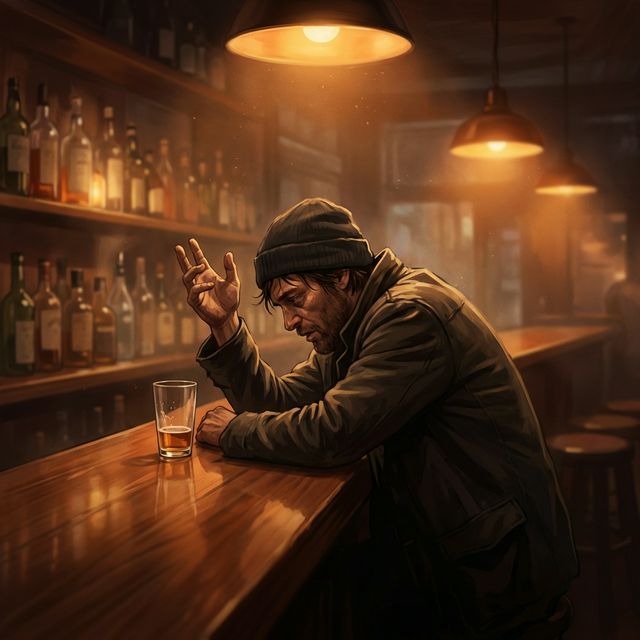
Mike Brannigan is your Thursday guy. Tips 30%. Knows the staff by name. Buys rounds for strangers during playoffs. He showed up at 6pm tonight, which is early for him. He ordered his first whiskey without the usual small talk. By 8pm, he mentioned losing a major account at work. By 9:30, he was repeating the same story to three different people. At 10pm, he reached for his wallet and knocked a full glass of wine into a woman's lap. He laughed. She didn't. The couple at the end of the bar is asking for their check. Mike is waving at you for another double. Your liquor license, his safety, and a relationship you actually value are all sitting on the same barstool.
Why This Conversation Goes Wrong
You announce the cutoff from behind the bar. "I think you have had enough, Mike." Saying this at volume, from a position of authority, across a public space turns a private struggle into a public spectacle. Mike will perform toughness for the room. He has to. You just made it a stage.
You keep serving because he is a regular. The logic sounds reasonable: he is a good customer, he walks home, he will be fine. Then he stumbles into traffic on the way home and you spend the next two years explaining to a jury why you served seven drinks to a visibly intoxicated person. "He is a regular" is not a legal defense.
You delegate to a junior bartender. Asking the new hire to cut off the veteran regular is a setup for failure. Mike will bulldoze them, they will cave, and you will have transferred your responsibility to someone without the relationship or authority to handle it.
The Warm Fence
Most bartenders are trained to cut people off. Almost none are trained to cut people off well. The difference matters because you are not just managing a legal obligation -- you are managing a relationship with someone who will be sober tomorrow and will remember exactly how you treated him tonight. The Warm Fence method sets an unmovable boundary wrapped in genuine care. The boundary does not bend. The warmth is what makes sure Mike comes back next week.
Move the conversation off the stage
Walk to his end of the bar. Lean in. Lower your voice. "Hey Mike, come talk to me for a second." You are not making a scene. You are having a conversation. Every patron in earshot notices the difference between a public cutoff and a private word. Mike notices it too. You just told him he still has your respect.
Lead with the person, not the policy
"You mentioned the account thing earlier. Sounds like a rough day." Before you set the boundary, acknowledge the human. Mike is not being difficult on purpose. He is lonely and the bar is the one place he feels welcome. If your first sentence is about him, not about his drink count, he will hear the second sentence differently.
Set the fence without apology
"I am going to switch you to water for the rest of the night." Not "I think maybe we should..." Not "Would you be okay if..." The boundary is the boundary. But notice the framing: you are not taking something away. You are switching to something else. The evening is not ending. The drinks are. Mike will push back. That is fine. The fence does not move.
Offer the warm side of the fence
"Let me get you some water and the sliders you like. On me tonight." You have closed one door and opened another. Food, water, and the knowledge that he is still welcome here. Mike does not want more whiskey. Mike wants to not feel alone. The sliders do that just as well.
Get him home safe and see him next week
"How are you getting home tonight? Let me call you a cab." This is not optional -- it is the last step of responsible service. But the way you say it matters. You are not managing a liability. You are looking out for a friend. "I will see you this weekend, Mike. Come in sober and I will tell you about the new bourbon we just got." The last thing he hears is a future invitation, not tonight's boundary.
The moment that changes everything
Mike is not fighting the cutoff. He is fighting the loneliness the cutoff reveals.
When Mike pushes back -- "Come on, you know me, I am here all the time" -- he is not arguing about alcohol. He is arguing against the evening ending. The bar is where Mike feels like himself. It is where the staff knows his name, where strangers become friends during the game, where he does not sit in an empty apartment thinking about the divorce. When you cut him off, you are not just taking away a drink. You are taking away the reason he came here tonight. That is why the Warm Fence works and a cold cutoff does not. A cold cutoff says: you are a problem, time to leave. The Warm Fence says: you are welcome here, the whiskey is done but you are not. That distinction is why Mike accepts the water. It is why he says "yeah, okay, you are probably right." It is why he comes back Saturday, sober, and thanks you. He was never fighting for the drink. He was fighting for the belonging. You let him keep it.
What to Say (and What Not To)
Instead of
"I think you've had enough, buddy."
Try this
"Hey Mike, I'm switching you to water for the rest of the night. Let me grab you some sliders too."
Instead of
"I can't serve you any more. It's the law."
Try this
"I'm looking out for you tonight. That's what this is."
Instead of
"You need to call a cab."
Try this
"How are you getting home? Let me take care of that for you."
Instead of
"Maybe you should slow down."
Try this
"Tell me about the account thing. What happened today?"
The Bigger Picture
Dram shop liability -- the legal doctrine that holds bars responsible for serving visibly intoxicated patrons -- results in average settlements of $300,000 when an intoxicated patron causes injury or death. In some jurisdictions, individual bartenders face personal criminal liability. The National Highway Traffic Safety Administration reports that alcohol-impaired driving accounted for 13,524 fatalities in 2022 alone. A cut-off conversation that feels uncomfortable for 90 seconds can prevent consequences that last lifetimes.
Beyond liability, there is business reality: a 2023 National Restaurant Association survey found that bars with formal responsible-service programs and trained cutoff protocols retain regular customers at 40% higher rates than those without. The reason is counterintuitive -- regulars trust establishments that enforce boundaries. Mike does not want a bar that lets him destroy himself. He wants a bar that cares enough to stop him. The cutoff, done right, is the strongest loyalty play you have.
Practice This Conversation
6 minutes · AI voice roleplay with Mike Brannigan
Reading about this is step one. Practicing it changes everything. Sonitura lets you rehearse this exact conversation with Mike Brannigan, a realistic AI bar regular, divorced sales rep having the worst day of his quarter who reacts to your words in real time. It takes 6 minutes. Next Thursday, when Mike is waving for a double and the room is watching, you will not hesitate. You will walk over, lean in, and know exactly how to keep the boundary and the friendship.
Practice This Scenario Free →