How to Communicate During a Service Outage: When Your Customer Is Losing $15,000 an Hour
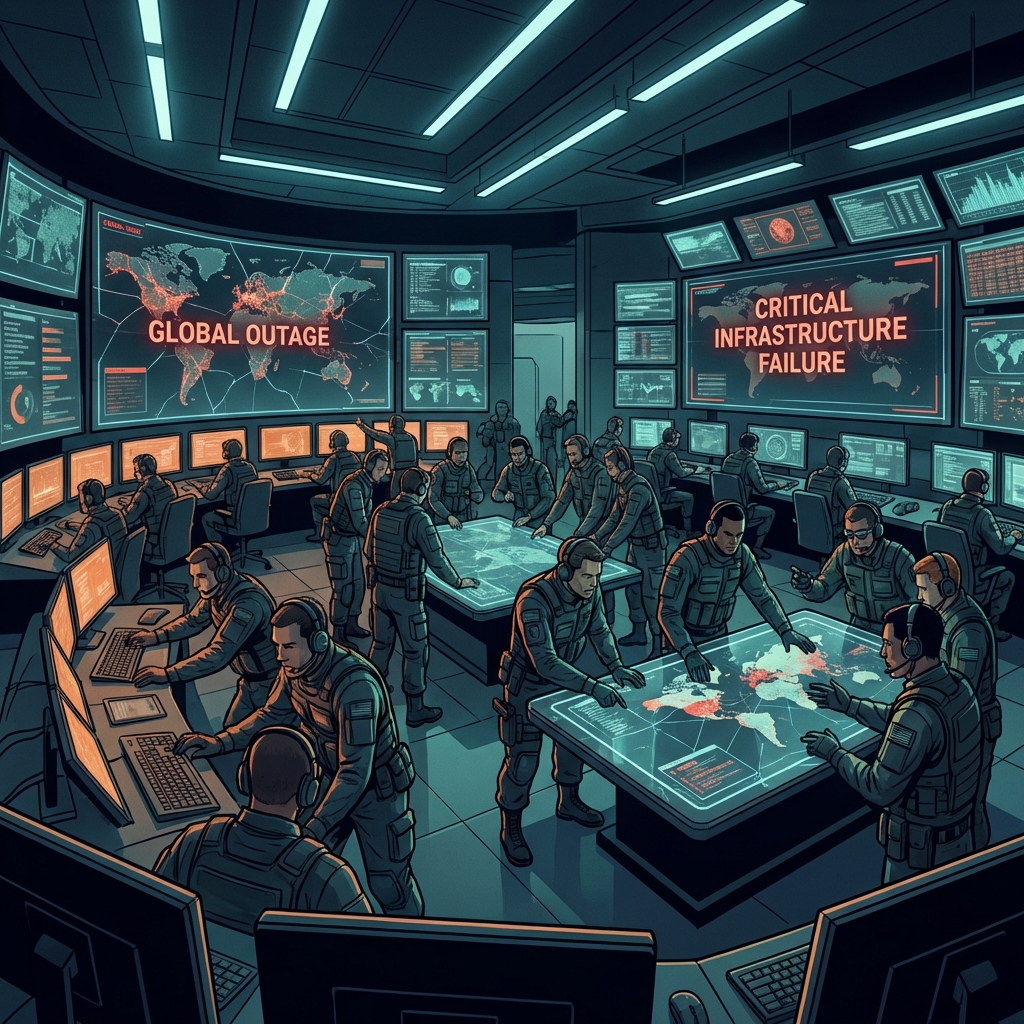
Rachel Simmons is not screaming. She's doing something worse — she's taking notes. Your platform has been down for four hours during her biggest promotional event of the quarter. She processes roughly $15,000 an hour during events like this. That's $60,000 gone. Not theoretical — actual orders that went to competitors because her checkout page returned a 503 error. She pays premium pricing specifically for the 99.9% uptime SLA. This is the second outage in three months. She has a boss to answer to, customers posting on social media asking if the store is closed, and an insurance claim she needs documented. She doesn't want your empathy. She wants three things: a realistic ETA, a written incident report, and the SLA credits she's owed. Everything else is noise.
Why This Conversation Goes Wrong
You open with "Our team is working hard to resolve this." Rachel knows your team is working on it. She's not calling to check if anyone showed up to work. That sentence communicates zero information. What she hears: "I have nothing useful to tell you and I'm filling dead air with corporate warm air."
You give a best-case ETA to calm her down. "We expect to be back up within the hour." If it takes three hours, you didn't calm her down — you lied to her. She published that ETA to her customers. Now she looks unreliable too. Overpromising during an outage doesn't buy time. It borrows trust at predatory interest rates.
You avoid discussing the SLA breach. She pays premium specifically for uptime guarantees. If you wait for her to bring up the SLA, she's already calculating how much she trusts you. Proactively acknowledging the breach before she asks is the difference between "they made it right" and "I had to fight for what I was owed."
You treat this like a standard support call. Queue position, ticket number, "we'll get back to you in 24-48 hours." Rachel is losing revenue in real time. Standard support cadence during an active outage signals that you don't understand the difference between an inconvenience and a crisis. She does.
The Transparent Triage
During an outage, customers don't expect perfection. They expect honesty. The companies that retain customers through outages aren't the ones with the best uptime — they're the ones who communicate like adults when things break. Transparent Triage is built on a principle from emergency medicine: tell the patient what you know, what you don't know, and what you're doing to find out. In that order. Every time.
Lead with what you know
"Rachel, here's what I can tell you right now: the outage started at 9:47am, it's affecting all storefront checkouts, and the engineering team has identified the root cause as a database failover that didn't trigger correctly. We are actively restoring." Specifics first. Time stamps, scope, cause if known. Specifics are the currency of trust during a crisis.
Name what you don't know — without spinning
"I don't have an exact restoration time yet. What I can give you is a realistic range: the engineering lead estimates 90 minutes to 3 hours depending on data integrity checks. I will not give you a number I'm not confident in." The temptation is to narrow the range to sound better. Don't. Rachel will respect a wide honest range over a narrow dishonest one.
Acknowledge the SLA breach before she asks
"I also want to address your SLA directly. This is a clear breach of the 99.9% uptime guarantee on your premium plan. You are owed service credits and I'm initiating that process right now — you won't need to file a separate request." This single proactive sentence does more for retention than any discount or apology. You just proved the SLA is real, not marketing.
Give her what she needs to communicate upward
"What do you need from me for your team and your customers? I can send you a written incident summary within the hour that you can publish or forward. I can also provide a direct email from our VP of Engineering if that helps with your leadership." Rachel's stress isn't just the lost revenue — it's that she has to explain this to people above her. Arm her.
Set the follow-up cadence and own it
"I'm going to update you every 30 minutes until this is resolved — even if the update is 'no change yet.' You'll also get a full post-mortem within 48 hours. And Rachel — this is the second outage in three months. I'm escalating your account for a dedicated reliability review. That's not a brush-off — I'll send you the name of the engineer assigned." The follow-through after the fire is where trust is rebuilt.
The moment that changes everything
She's not angry about the outage. She's angry about the silence.
Here's what's counterintuitive about outage communication: the outage itself rarely causes churn. The silence does. Rachel can explain a platform outage to her boss — technology breaks, everyone knows that. What she can't explain is why nobody told her what was happening for four hours. Why she had to call in, wait in a queue, and extract basic information from someone who seemed to know less than she did. A 2024 StatusPage study found that companies who communicated proactively during outages retained 95% of affected customers, while companies who waited for customers to contact them retained only 60%. The delta isn't the outage duration. It's the information vacuum. Rachel's anger, when you decode it, isn't about $60,000 in lost sales. It's about refreshing a status page for four hours that says "investigating" while her business bleeds. The fix for this specific call is transparency. The fix for the systemic problem is a communication protocol that treats silence as a second outage.
What to Say (and What Not To)
Instead of
"Our team is actively working on this."
Try this
"The root cause is a database failover failure. Engineering has identified the issue and is restoring now. Realistic ETA is 90 minutes to 3 hours."
Instead of
"I understand this is frustrating."
Try this
"You're losing revenue in real time during your biggest event, and this is the second time in three months. I'm not going to minimize that."
Instead of
"You can file an SLA credit request through our portal."
Try this
"Your SLA credits are being initiated right now. You won't need to file anything — I'll send confirmation to your email within the hour."
Instead of
"We'll share a post-mortem when it's ready."
Try this
"Full post-mortem in 48 hours. I'm also sending you a written incident summary in the next 60 minutes so you have something to share with your team today."
Instead of
"Is there anything else I can help with?"
Try this
"I'll update you every 30 minutes. If it resolves sooner, you'll hear from me sooner. What format works best — call, email, or text?"
The Bigger Picture
Downtime costs have increased dramatically as businesses become more dependent on SaaS infrastructure. Gartner estimates the average cost of IT downtime at $5,600 per minute for enterprise companies, but for e-commerce specifically, the number skews higher during peak events. Rachel's $15,000/hour isn't unusual for a mid-size e-commerce operation during a promotional event. When you multiply that across all affected customers during a platform-wide outage, a four-hour incident can represent millions in collective customer losses — far exceeding the engineering cost of preventing it.
The Service Recovery Paradox, documented extensively in customer experience research, shows that customers who experience a failure that is resolved transparently and proactively can become more loyal than customers who never experienced a failure at all. But the paradox has a threshold: it only works once, maybe twice. Rachel is on outage number two in three months. The recovery window is closing. A third outage without a systemic change — not just better communication, but a visible investment in reliability — will break the relationship regardless of how well the support call is handled.
The most revealing metric in outage communication isn't customer satisfaction scores — it's the ratio of inbound support contacts to proactive outbound communications. Companies with mature incident communication processes see inbound volume drop by 60-70% during outages because affected customers already have the information they need. Every call Rachel makes is a failure of proactive communication, not just a failure of uptime.
Practice This Conversation
8 minutes · AI voice roleplay with Rachel Simmons
Reading about this is step one. Practicing it changes everything. Sonitura lets you rehearse this exact conversation with Rachel Simmons, a realistic AI e-commerce store manager, $2m annual revenue, premium tier who reacts to your words in real time. It takes 8 minutes. When a premium customer calls during an outage with $60,000 on the line, you'll already know how to trade silence for specifics.
Practice This Scenario Free →